

Livraison offerte en France pour toute commande de 200€ minimum

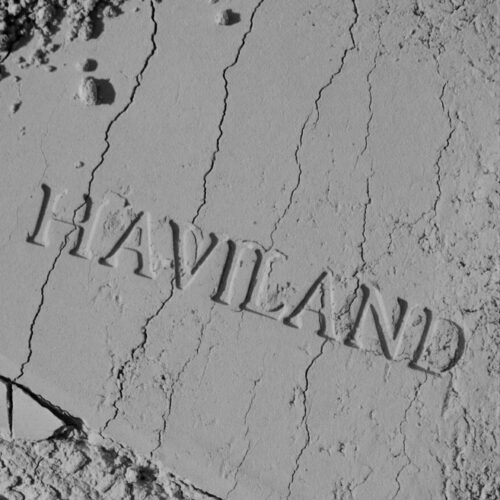
Haviland craftsmanship, the art of Limoges porcelain since 1842

Founded in 1842 in Limoges, the world capital of porcelain, Maison Haviland is today one of the last French manufactures mastering, under one roof, the three porcelain métiers: printing, production, and decoration.

An exclusive porcelain body, more than 3,000 shapes inherited from nearly two centuries of archives, and 100% French production in Limoges: all guarantees of exceptional artisanal expertise, passed down through generations.

KAOLIN HAVILAND

THE PORCELAIN PASTE, AN EXCLUSIVE ALCHEMY

Everything begins in Saint-Yrieix-la-Perche, in Haute-Vienne, where the kaolin deposit discovered in 1768 made Limoges the world capital of porcelain. This white clay, known as the “white gold” of the Limousin region, remains today the founding ingredient of Haviland’s porcelain body.

Three minerals compose the porcelain paste: kaolin for whiteness and plasticity, feldspar for translucency, and quartz for strength. Ground and mixed with water for several hours, they form an exclusive paste developed by Haviland according to closely guarded proprietary formulas.

Depending on the manufacturing process, this paste is used in three consistencies:
• A soft paste for shaping flatware
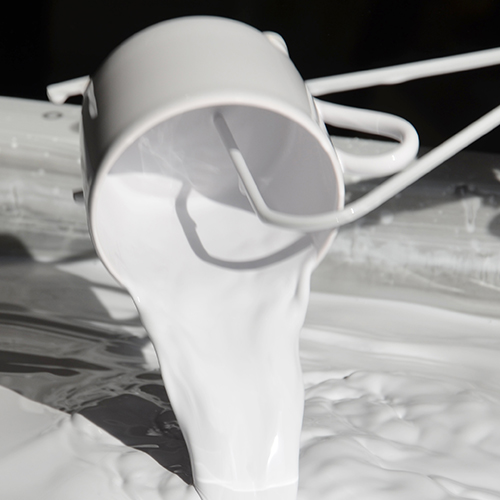
• A liquid slip for casting complex forms
• A dry granular paste for pressing

This variety allows Haviland to offer more than 3,000 shapes—a unique repertoire in France, the result of nearly two centuries of archives and creations.

Crédit Instagram : @odieuxboby

THE MODELING WORKSHOP, WHERE FORMS ARE BORN

Before a plate, cup, or vase comes to life, it is born in the modeling workshop. Here, model makers—true sculptors—bring the design studio’s drawings to life. Each original shape is hand-sculpted in plaster and refined through successive adjustments until a perfect model is achieved.

From this master model, production molds are created, also made of plaster. This invisible stage is crucial, as it determines the geometric precision and refinement of every piece leaving the manufacture. Haviland preserves more than 3,000 shapes in its archives, some dating back to the 19th century.

Crédit Instagram : @odieuxboby

PRODUCTION: SHAPING, CASTING, PRESSING

Haviland employs three complementary production techniques depending on the shape and complexity of each porcelain piece.

SHAPING:

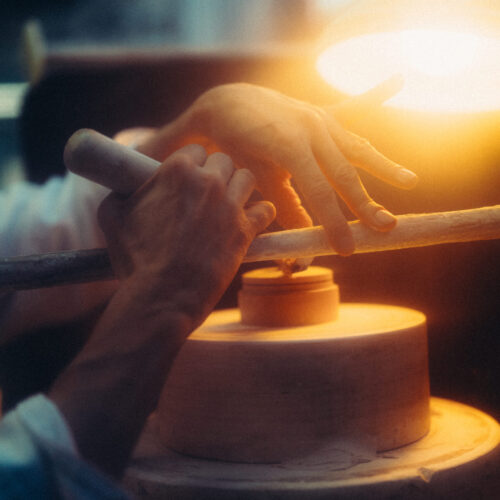
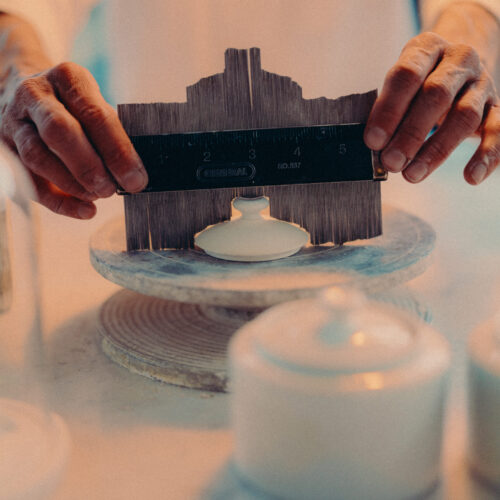
A plaster mold defines the outer shape while a steel profile tool sculpts the interior. Ideal for flat pieces such as plates, this method combines industrial precision with handcrafted finishing.

CASTING:


Complex shapes—pitchers, tureens, sculptural vases—are obtained by pouring slip into plaster molds. The plaster gradually absorbs water, leaving a porcelain layer that perfectly conforms to the mold.

PRESSING:


Dry granular paste is compressed under high pressure for pieces requiring greater density. This technique is reserved for specific architectural and decorative forms.

EMAILLAGE-1

GLAZING AND HIGH-FIRE FIRING

A Haviland porcelain piece undergoes two firings, separated by a key step: glazing.

BISQUE FIRING : 


The first firing occurs at around 950°C, giving mechanical strength while leaving the piece porous—essential for glaze absorption.

GLAZING : 


Made of silica, pegmatite, kaolin, and lime mixed with water, the glaze is applied by immersion. It gives porcelain its shine, brilliance, and distinctive translucency.

GRAND FEU FIRING : 


The second firing lasts 24 hours at 1,400°C. Under extreme heat, the glaze fuses with the body, giving porcelain its final structure. The result is known as “the white”—a pure object ready for decoration.

Each piece then undergoes strict quality control before reaching the decoration workshop.

Crédit Instagram : @odieuxboby

PRINTING: CHROMOLITHOGRAPHY AND SCREEN PRINTING

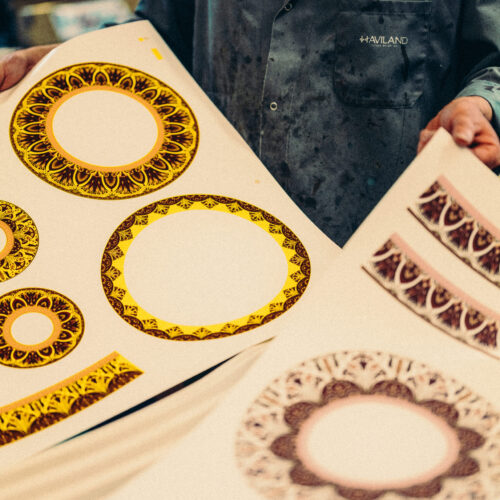
Haviland is one of the last Limoges manufactures to maintain its own chromolithography workshop—an exclusive heritage of 19th-century technical innovation led by Félix Bracquemond in the Auteuil studio.

Chromolithography transfers complex multi-color designs onto porcelain using layered mineral inks. This demanding technique ensures absolute fidelity between original artwork and final decoration.

Screen printing complements this process. From Latin sericum (silk) and Greek graphein (to write), it uses silk screens placed between ink and surface. Colors are made from carefully selected mineral or vegetal pigments.

From the iconic Limoges kiln blue to organic effect colors and reactive glazes, the Haviland laboratory treats color like a goldsmith working precious metals.

Crédit Instagram : @odieuxboby

HAND DECORATION, A JEWELER’S GESTURE

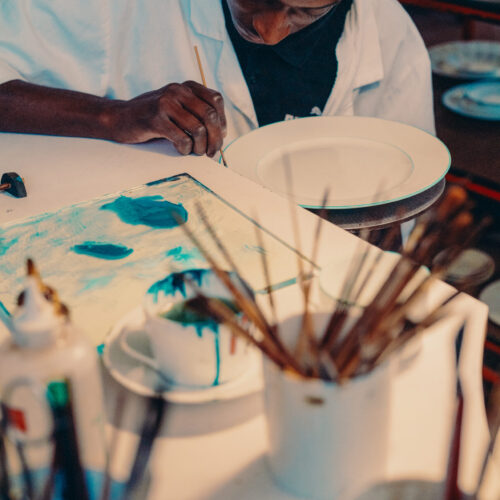
Haviland is one of the last Limoges manufactures mastering, entirely by hand, precious metal inlay and relief decoration techniques. This goldsmith-level craftsmanship, passed from artisan to artisan, gives each piece a unique signature.

Inlay alone requires eleven successive steps. A protective varnish is first applied, then the piece is immersed in acid to etch the glaze and reveal raised areas. These are then polished and filled with precious metals. Gold, platinum, or silver ultimately enhance the design.

This fully manual finishing process requires hours of meticulous work and expert craftsmanship trained over several years. This artistic mastery, combined with absolute standards, gives Haviland collections their heritage value and presence on the world’s most prestigious tables—from the Ritz Paris to the Orient Express, from heads of state to royal families.

Manufacture-HAVILAND

ONE HOUSE, THREE MÉTIERS, ONE ROOF

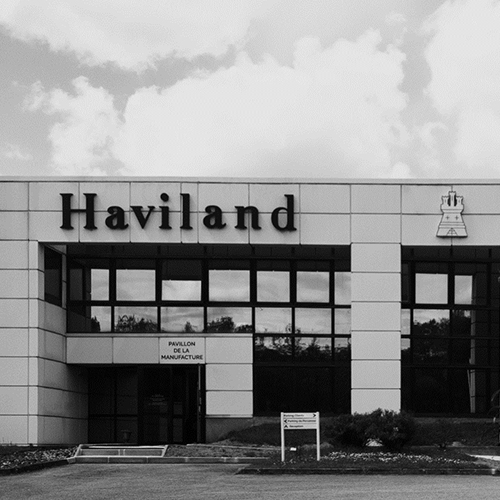
Printing, production, decoration: Haviland is today the only Limoges porcelain manufacture integrating all three métiers under one roof. A rare French exception ensuring full mastery of the production chain, from porcelain body to final decoration.

This vertical integration, envisioned by David Haviland in 1842, provides three key advantages: complete traceability, strong local anchoring in Limoges (100% French production), and unmatched diversity with more than 3,000 available shapes and endless decorative combinations.

Across generations, Haviland has continuously combined modern industrial standards with artisanal creativity. Today, this expertise continues in Limoges, embodying worldwide excellence in French porcelain.

Updating…
  • No products in the cart.
Skip to content