Livraison offerte en France pour toute commande de 200€ minimum

The history of Haviland, a Limoges porcelain manufacturer since 1842

Since 1842, Haviland has embodied the excellence and forward-thinking spirit of French porcelain. A pioneering French tableware manufacturer, the Maison preserves a unique savoir-faire, born from an American passion for Limoges “white gold” and driven by a shared ambition: to transform each piece into a work of art.

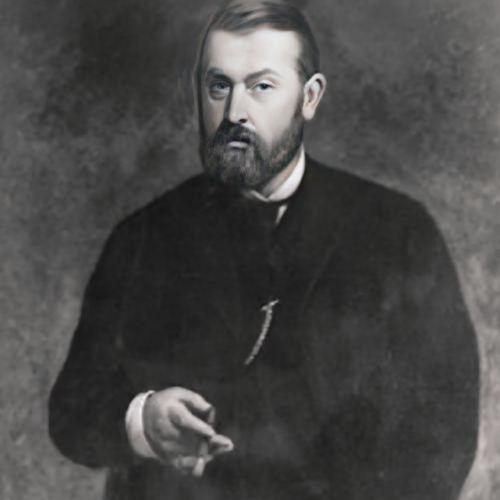
DAVID HAVILAND, IN PURSUIT OF WHITE GOLD


It all began in New York in 1838. David Haviland founded an import company specializing in earthenware and porcelain. A simple accident changed his destiny: a customer came to replace a chipped saucer. David then discovered Limoges porcelain and was immediately captivated by its exceptional whiteness and refinement.

In 1842, he crossed the Atlantic to settle in Limoges and established his own manufacture there. A first: never before had an American chosen to set up a factory in Europe. Located close to the kaolin deposits of Saint-Yrieix-la-Perche, David introduced a groundbreaking vision: mastering the entire production process, from paste to decoration, in order to ensure flawless quality.

A visionary, he invented enluminage, a hand-painting technique that revolutionized porcelain decoration, and imported the first kilns capable of firing up to 2,000 plates simultaneously. International recognition quickly followed: a gold medal at the Crystal Palace Exhibition in New York in 1853, and a silver medal at the Paris Universal Exhibition in 1855.


Haviland was born. Limoges porcelain, in turn, entered an irreversible period of growth.

davis haviland
atelier auteuil

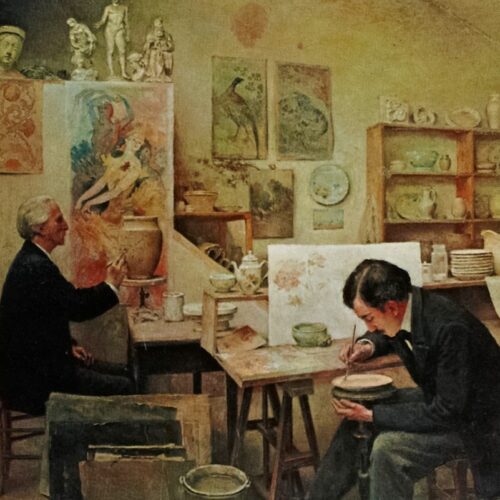
THE AUTEUIL WORKSHOP, A LABORATORY OF AVANT-GARDE


In 1872, Haviland reached a decisive milestone by establishing an artists’ studio on rue Michel-Ange in Auteuil, entrusted to Félix Bracquemond, an engraver close to the Impressionists. The workshop quickly became a laboratory of avant-garde creativity, influenced by Japonism, Impressionism, and Symbolism.

The leading creators of the time gathered there: Édouard Dammouse, Albert Dammouse, Ernest Chaplet, Jules Desbois, and Paul Gauguin. Together, they created more than 400 revolutionary designs.

Asymmetrical compositions, Impressionist slip decorations, the brush application of colored liquid clay, chromolithography on porcelain, mechanical calibration, and new kiln technologies: in Auteuil, Haviland brought together artistic boldness and technical innovation, leaving a lasting mark on French decorative arts.

THE MOST BEAUTIFUL TABLES IN THE WORLD


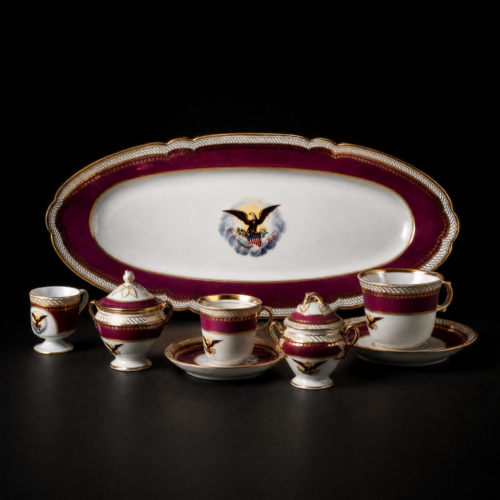
Six Presidents of the United States chose Haviland for their tables, from Abraham Lincoln in 1861 to Franklin D. Roosevelt in 1938. From Lincoln’s arrival at the White House, the choice of Haviland porcelain embodied a vision of tableware that was refined, elegant, and resolutely modern, reflecting the image of a nation in the midst of asserting itself.

The Hayes service (1877–1881), comprising more than 1,000 pieces adorned with watercolors by Theodore Davis, remains one of the most iconic in the White House. Every detail illustrates the symbols of power and American identity, transforming these services into true works of art, where institutional prestige meets artistic refinement.

This recognition extended far beyond Washington. Royal families, embassies, state palaces, major institutions, luxury hotels, and the tables of great chefs: for nearly two centuries, Haviland tableware has accompanied exceptional moments, from official receptions to the most distinguished dining experiences.

Generated with Kive.ai - Replace the white sculpture with the porcelain service from the reference image a large oval platter in the back with matching cups and lidded pieces arranged across the front. Mat
H

THE BOLDNESS OF GREAT ARTISTS


At the dawn of the 20th century, while porcelain manufactories still entrusted their decorations to anonymous craftsmen, Haviland made a radically modern choice: inviting the greatest artists of its time to design for the table.

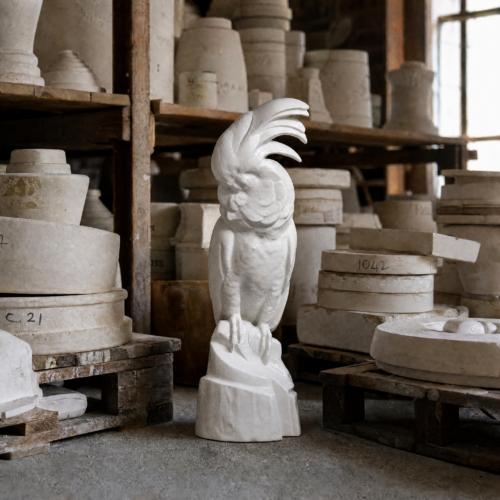
As early as 1900, the sculptor Antoine Bourdelle, a student of Auguste Rodin, began reinterpreting “white gold,” opening the way to an unprecedented dialogue between sculpture and porcelain. He was followed by Édouard-Marcel Sandoz, a master animal sculptor, who brought a new sculptural nobility to Limoges porcelain: his living forms and animals captured in motion turned each piece into a work of art in its own right.

This dialogue reached its peak with Art Deco. The Maison brought together a constellation of artists who reinvented porcelain through geometric lines, gold accents, and stylized compositions. Suzanne Lalique, daughter of René Lalique, created forms and decorations of rare graphic elegance. Jean Luce, one of the undisputed masters of tableware in the 1920s and 1930s, developed a refined vocabulary marked by gold lines and geometric motifs. Jean Mayodon, a renowned ceramist and artistic director of the Manufacture nationale de Sèvres, lent his talent to pieces inspired by a reimagined Antiquity.

These collaborations established a tradition of dialogue with living creativity that has never ceased since.

CENTURY-LONG PARTNERSHIPS


Some stories are measured in generations. For more than a century, Haviland has adorned the table of the The Ritz Paris, the iconic palace on Place Vendôme, and has created porcelain collections for it that have become legendary, such as Marthe Ritz Paris.

The same enduring partnership exists with the Orient Express, whose carriages the Maison has equipped since the golden age of rail travel. Today, Haviland continues to support the revival of the world’s most famous train, alongside the studio of Maxime d’Angeac and the table of chef Yannick Alléno.

Two names, two worlds, one shared standard: an enduring French art de vivre that has never faded.

Orient Express
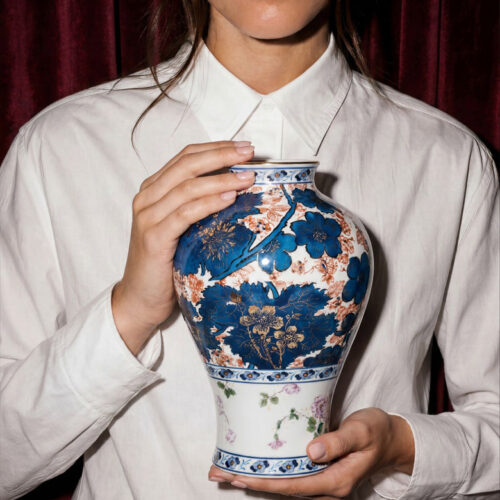
HOMEPAGE-VASE-DAMMOUSE-PHOTO3-DECO

TODAY’S MOMENTUM


In 1992, the manufacture moved into a modern factory in Limoges, while preserving its ancestral French savoir-faire.

Today, Haviland affirms a renewed artistic direction, faithful to the pioneering spirit of its founder and to the artistic freedom that has always defined the Maison.

Its vision is to re-enchant everyday life by bringing to life the artistic richness of 19th- and 20th-century French heritage, so that beauty becomes an inspiring presence in every moment of life.

This ambition unfolds through three major artistic movements that structure the Maison’s collections: Classicism and Neoclassicism, seeking harmony and an ideal of beauty; Orientalism and Exoticism, celebrating elsewhere, discovery, and escape; and Modernism and Abstraction, expressing creative freedom and the renewal of forms.

Reissues of iconic designs from its archives, exclusive collaborations, and an expansion into decorative objects: Haviland is writing a new chapter in its history today, without ever renouncing what has made it, for nearly 200 years, a truly singular house in the world of French porcelain.

Updating…
  • No products in the cart.
Skip to content